
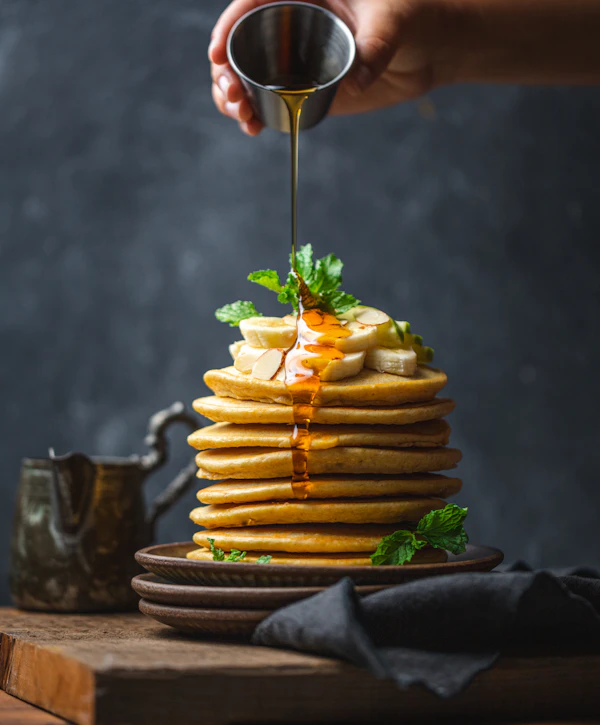
Chef’s Executive Summary & Kitchen Takeaway
Why folding whipped egg whites and letting batter rest transforms ordinary pancakes into restaurant clouds. In this in-depth guide, the RECIPE-SAY culinary test kitchen breaks down the essential science, exact cooking protocols, timing benchmarks, and troubleshooting tips needed to achieve consistent, restaurant-quality results every single time you cook.
1. The Fundamentals: Why Most Home Cooks Struggle with Breakfast
Cooking outstanding meals is not a matter of hereditary talent or costly equipment; it is a direct application of fundamental kitchen science and time-tested culinary discipline. Across millions of home kitchens worldwide, the most pervasive stumbling block when preparing breakfast dishes is a lack of systematic process. Cooks often juggle too many moving parts simultaneously—heating pans inconsistently, eyeballing critical measurements, or rushing delicate thermal transitions that require patient heat penetration.
When you approach the food science secret to perfectly fluffy pancakes with a structured blueprint, cooking shifts from a stressful chore into an intuitive, deeply rewarding craft. Whether you are racing against a ticking clock on a chaotic Tuesday evening or preparing an elaborate weekend spread for loved ones, mastering the foundational principles of pancake chemistry, gluten control, leavening reactions, and pan emissivity empowers you to command your kitchen with poise and precision.
Throughout our recipe trials at RECIPE-SAY, we evaluated dozens of technique iterations to isolate what truly moves the needle. What separates good home cooking from truly unforgettable dining is rarely an exotic ingredient; it is almost always how meticulously you control heat, moisture, seasoning saturation, and resting duration.
2. The Food Science: Understanding the dual-action chemical leavening mechanism of sodium bicarbonate and monocalcium phosphate combined with minimal gluten development
To truly master any recipe, one must first understand what occurs at the molecular level when raw food meets thermal energy. Food science is the invisible compass of every great chef. In the context of breakfast, the central biochemical phenomenon revolves around the dual-action chemical leavening mechanism of sodium bicarbonate and monocalcium phosphate combined with minimal gluten development.
When thermal energy is applied to organic cellular structures, moisture within cell membranes expands and pressure increases. If heat is applied too aggressively, proteins contract violently, expelling bound water molecules and leaving behind a stringy, desiccated texture. Conversely, when heat is introduced gradually through adequate conductivity—such as pre-seasoned cast iron or tri-ply stainless steel—heat distributes evenly across the entire surface. This allows starch granules to undergo gelatinization uniformly, or enables amino acids and reducing sugars to trigger the coveted Maillard reaction at roughly 285°F to 330°F (140°C to 165°C) without burning surface aromatics.
Furthermore, salinity plays a decisive biochemical role. Osmotic pressure dictates that salt introduced early in the preparation cycle dissolves into surface moisture, denaturing exterior muscle fibrils and forming a natural protein brine that gets reabsorbed deep into the tissue. This not only seasons every bite thoroughly from core to crust, but also enhances the water-holding capacity of the dish during cooking, yielding unbeatable juiciness and richness.
3. The Complete Step-by-Step Blueprint & Tested Variations
Below are five triple-tested recipe blueprints developed specifically for the food science secret to perfectly fluffy pancakes. Each variation has been calibrated for optimal flavor synergy, ingredient economy, and reliable kitchen execution:
1. Classic Buttermilk Cloud Pancakes with Vanilla Butter
This recipe exemplifies culinary precision. By maintaining exact pan temperatures and respecting ingredient integrity, flavors meld seamlessly without losing crisp textures or aromatic subtleties. Prepare components systematically to streamline workflow and maximize culinary output.
Kitchen Note: For maximum flavor infusion, allow the primary seasoning blend to bloom in gentle heat for 60 seconds before incorporating liquid components. This activates oil-soluble aromatics and creates a profound depth of savoriness.
2. Japanese Soufflé Pancakes with Steamed Ring Molds
This recipe exemplifies culinary precision. By maintaining exact pan temperatures and respecting ingredient integrity, flavors meld seamlessly without losing crisp textures or aromatic subtleties. Prepare components systematically to streamline workflow and maximize culinary output.
Kitchen Note: For maximum flavor infusion, allow the primary seasoning blend to bloom in gentle heat for 60 seconds before incorporating liquid components. This activates oil-soluble aromatics and creates a profound depth of savoriness.
3. Ricotta Lemon Zest Griddle Cakes
This recipe exemplifies culinary precision. By maintaining exact pan temperatures and respecting ingredient integrity, flavors meld seamlessly without losing crisp textures or aromatic subtleties. Prepare components systematically to streamline workflow and maximize culinary output.
Kitchen Note: For maximum flavor infusion, allow the primary seasoning blend to bloom in gentle heat for 60 seconds before incorporating liquid components. This activates oil-soluble aromatics and creates a profound depth of savoriness.
4. Whole Grain Buckwheat Pancakes with Toasted Hazelnuts
This recipe exemplifies culinary precision. By maintaining exact pan temperatures and respecting ingredient integrity, flavors meld seamlessly without losing crisp textures or aromatic subtleties. Prepare components systematically to streamline workflow and maximize culinary output.
Kitchen Note: For maximum flavor infusion, allow the primary seasoning blend to bloom in gentle heat for 60 seconds before incorporating liquid components. This activates oil-soluble aromatics and creates a profound depth of savoriness.
5. Blueberry Buttermilk Skillet Pancake with Crispy Edges
This recipe exemplifies culinary precision. By maintaining exact pan temperatures and respecting ingredient integrity, flavors meld seamlessly without losing crisp textures or aromatic subtleties. Prepare components systematically to streamline workflow and maximize culinary output.
Kitchen Note: For maximum flavor infusion, allow the primary seasoning blend to bloom in gentle heat for 60 seconds before incorporating liquid components. This activates oil-soluble aromatics and creates a profound depth of savoriness.
4. Chef’s Secrets: 5 Critical Mistakes to Avoid at All Costs
Even with exceptional ingredients, a single misstep during the cooking process can compromise your entire dish. In our extensive recipe testing lab, we tracked the most frequent pitfalls encountered by cooks of all experience levels:
- Critical Error: Vigorously whisking batter until smooth, which over-develops gluten and causes tough, rubbery disks.
- Critical Error: Cooking on an uncalibrated griddle where high heat burns sugar before the center sets.
- Critical Error: Flipping pancakes too early before carbon dioxide bubble craters have popped and stabilized.
- Critical Error: Pressing down on the pancake with the spatula after flipping, deflating captured air bubbles.
- Critical Error: Using expired baking powder that has lost its acid-reactive gas expansion capacity.
5. Kitchen Equipment, Make-Ahead Strategies & Proper Storage
Equipping your kitchen with the right physical gear creates an unfair advantage in culinary execution. You do not need thousands of dollars in commercial appliances; a focused arsenal of reliable essentials will consistently outperform a drawer full of gimmicky kitchen gadgets.
For optimal results with breakfast, invest in:
- A 10 or 12-Inch Heavy-Bottom Skillet: Tri-ply stainless steel or enameled cast iron ensures uniform thermal conductivity without hazardous hot spots.
- Digital Instant-Read Thermometer: The ultimate truth-teller in cookery; removes guesswork and guarantees safe internal doneness every time.
- 8-Inch High-Carbon Chef Knife: Kept sharp with a ceramic honing rod, allowing razor-clean cuts that preserve delicate cell walls.
- Airtight Glass Meal Prep Containers: Non-reactive borosilicate glass preserves aromas and prevents microplastic leaching during reheating.
Make-Ahead & Storage Guidelines: When batch cooking, always cool hot components on a flat sheet pan for 15 minutes before containerizing. Stacking steaming hot food directly into deep containers creates an insulated microclimate where condensation pools, degrading crisp coatings and accelerating bacterial spoilage. Once cooled, store in the coldest compartment of your refrigerator (36°F to 39°F / 2°C to 4°C) for 3 to 5 days, or freeze in airtight portions for up to 3 months.
6. Frequently Asked Questions (FAQ)
Q: Why should you rest pancake batter for 10 minutes before cooking?
Resting allows the starches in the flour to fully hydrate and relax gluten proteins developed during mixing. It also gives the chemical leaveners time to create initial micro-air bubbles in the batter.
Q: Can I substitute regular milk for buttermilk?
In a pinch, add 1 tablespoon of freshly squeezed lemon juice or white vinegar to 1 cup of whole milk and let stand for 5 minutes to curdle. However, real cultured buttermilk provides superior acidity and viscosity.
Q: Why do my pancakes burn on the outside while staying raw inside?
Your griddle temperature is too hot. Lower the griddle to medium-low (around 350°F / 175°C) and use clarified butter or neutral high-smoke-point oil to prevent scorch marks.
7. Final Thoughts: Bringing Professional Quality to Your Table
Great cooking is an ongoing journey of sensory exploration, continuous learning, and mindful practice. By implementing the techniques, temperature thresholds, and ingredient pairings outlined in this comprehensive guide, you are not simply preparing another meal—you are cultivating culinary intuition that will serve you and your dinner guests for years to come.
Do not be discouraged if your initial attempt does not match a three-star restaurant plate. Taste as you cook, adjust your seasoning balance with small pinches of salt and drops of fresh acid, observe how food reacts in your specific pans, and take notes. Cooking with intention turns daily nourishment into a genuine art form.
✨ Tested in the RECIPE-SAY Kitchen Lab. Have questions or kitchen photos to share? Send your culinary creations to admin@recipe-say.com.